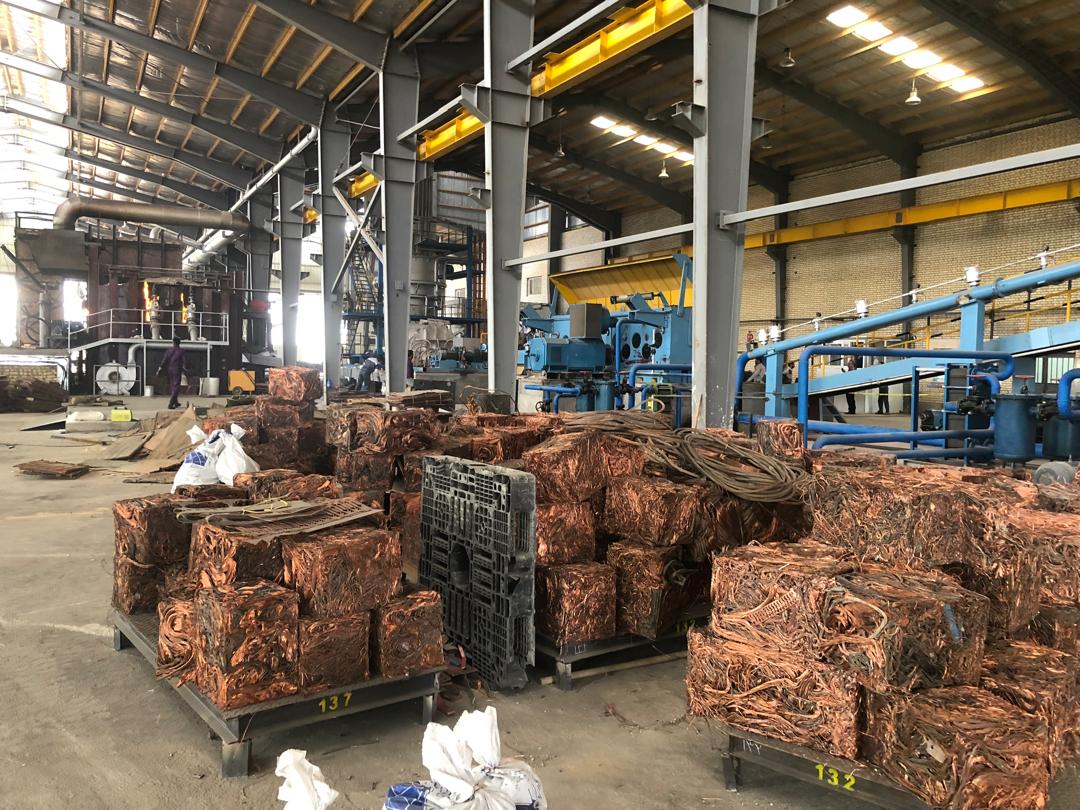
Copper scrap refers to any piece, fragment, or copper-containing material that is no longer usable in its original form due to consumption or manufacturing processes. This includes wires, cables, copper pipes, electric motor components, sheets, fittings, and even electronic boards containing copper. Given copper’s high value, copper scrap is considered a valuable commodity and is actively traded in the market. Recycling copper is particularly important because producing new copper from mines is highly energy-intensive, while recycling copper requires up to 85% less energy. Globally, around one-third of consumed copper comes from recycled scrap. In Iran as well, where mineral resources are limited, recycling copper scrap (often referred to as “red gold”) helps reduce costs and pollution.
From a commercial perspective, copper scrap has high demand in both Iranian and global markets. The price of copper scrap is directly tied to the price of pure copper in metal exchanges and fluctuates with the global copper market. Taban Mes Iranian Company is active in this market, focusing on the purchase of copper scrap and playing the role of an intermediary between scrap sellers and copper-consuming industries by offering competitive prices. The following sections explore the different types of copper scrap, their applications in Iran and worldwide, differences between copper scrap and copper cathode, sources of copper scrap, and frequently asked questions about this field.
Copper scrap is classified based on its source and appearance. Each type varies in terms of copper purity, price, and usage. In Iran, common terms include dry copper, burnt copper, cable copper, armature scrap, telecommunication copper, pipe scrap, and melting scrap. Below, each type is introduced with its characteristics and applications.
Dry copper refers to copper scrap that is completely or nearly pure, without any coating or significant contamination. This type of scrap typically includes shiny copper wires or rods (bare), copper ingots or pure copper pieces, copper strips and busbars, and clean copper sheets. Dry copper has the highest purity among copper scraps (often over 99%) and therefore commands the highest price in the scrap market. Internationally, it is known as Bare Bright Copper, the highest-grade copper scrap.
Applications: Due to its high purity, dry copper is directly used in sensitive industries. In both Iran and globally, cable and wire manufacturers prefer to melt dry copper and produce high-quality wire and cable without the need for complex refining. According to reports, dry copper (bright red cable) with 99.99% purity is directly used in production lines without any additional processing. Recycled pure copper is also used in the production of high-conductivity electrical components (like transformers and electric motors) and high-quality copper products (such as new copper pipes or premium brass alloys). In the global market, pure copper scrap is a highly demanded raw material in copper manufacturing plants.
Burnt copper refers to copper scrap that has been exposed to heat or prolonged contact with air, resulting in the formation of an oxide layer on its surface, causing it to lose its shiny, reddish color. The most common example of burnt copper is copper wires and cables that have been burned to remove their plastic insulation. This process results in black or dark copper wires, known as black cable or burnt copper. Burnt copper has lower purity compared to bare bright copper because copper oxide has formed on its surface and oxidized part of the metal’s mass. For this reason, burnt copper is bought and sold in the scrap market at a lower price than bare bright copper. Sometimes, the term burnt copper also includes other oxidized scrap (e.g., very old copper sheets or pipes covered in patina), but its most common usage refers to burnt wires.
Applications: Due to its reduced purity and the presence of oxide, burnt copper is generally only suitable for remelting. This type of scrap is placed in thermal recycling furnaces so that the oxides, along with other impurities, are removed and pure copper is recovered. The products obtained from melting burnt copper may have lower purity than primary copper and are mostly used in the production of less precise copper parts or copper alloys (such as secondary-grade bronze and brass). In Iran, many copper scrap smelting workshops use burnt copper to produce scrap copper ingots or copper anodes for further refining. In the international market, oxidized copper also has lower demand and is usually not exported unless quality improvement processes are carried out, as buyers primarily seek the highest-grade scrap.
Products derived from melting burnt copper may have lower purity compared to primary copper and are mostly used in the production of less precise copper parts or secondary copper alloys such as bronze and lower-grade brass. In Iran, many copper scrap smelting workshops use burnt copper to produce recycled copper ingots or anodes for further refining. In the international market, oxidized copper is in lower demand and is rarely exported unless quality-enhancement processes are applied, as buyers typically seek high-grade scrap.
Copper cable scrap refers to various copper wires and cables that have reached the end of their service life or are leftover from the manufacturing process. This category is one of the most common types of copper scrap, sourced from both industries and the demolition of buildings and facilities. Cable scrap itself is divided into subcategories:
• Insulated wire and cable: These are insulated electrical wires (e.g., building wires) that still have their plastic covering. They can be bought and sold by weight, but for recycling, the insulation must first be removed. Stripping the insulation is done either with stripping machines (industrial cutters) or, unfortunately, in some cases by improper burning. The latter method (burning) turns this scrap into burnt copper, reducing its value. Therefore, buyers prefer to receive the cables intact with insulation and extract the copper themselves using machines to preserve the metal quality.
• Red cable (Bare Bright): This refers to copper wire and cable without plastic insulation, presented as shiny, bare copper strands. Red cable is essentially equivalent to bare bright copper and may come from bare electrical wiring (without insulation) or cables whose insulation has been mechanically removed. The bright reddish color of these wires indicates purity and the absence of oxidation, which is why they have the highest value among cable scrap. In the global market, Bare Bright is a highly demanded commodity.
• Black cable: This category includes wires and cables with a dark appearance, either because they have lost their shine due to exposure to air and sunlight, or because they have been turned into black scrap by burning. Black cable is the burnt copper from cables, as previously described, and is priced lower than red cable.
Applications: After recycling, wire and cable scrap re-enters the electrical and electronics industry cycle. In Iran, worn-out copper cables are collected and melted down to produce copper ingots or new rods, which are then used to manufacture new wires, motor windings, transformers, and more. Red cable (bare bright copper), due to its very high purity, can go directly to wire and rod manufacturing plants, while insulated cables must first be processed. In the global market, large volumes of cable scrap, especially from developed countries, are sent to industrial countries (such as China and India) for recycling. After recycling, these cables provide cheaper raw materials for the wire and cable industries of those countries.
Applications: Burnt copper, due to its reduced purity and the presence of oxides, is generally only suitable for remelting. This type of scrap is placed into thermal recycling furnaces to separate oxides and other impurities, allowing for the recovery of pure copper. The resulting products often have lower purity than primary copper and are typically used in the production of less precise copper components or copper alloys such as second-grade bronze and brass. In Iran, many copper scrap melting workshops use burnt copper to produce recycled copper ingots or copper anodes for re-refining. In international markets, oxidized copper has lower demand and is usually not exported unless its quality is upgraded, as buyers tend to seek the highest-grade scrap.
Copper cable scrap refers to various types of copper wires and cables that have either reached the end of their useful life or are leftover from production processes. This category is one of the most common forms of copper scrap, sourced both from industries and from the demolition of buildings and infrastructure. Cable scrap is divided into the following subcategories:
Insulated wires and cables: Electrical wires with plastic insulation (e.g., building wires) that still have their outer coating. These can be bought and sold by weight, but for recycling, the insulation must first be removed. This can be done using stripping machines (industrial cutters) or, unfortunately, through improper burning. The latter method reduces the value of the copper by turning it into burnt copper. Therefore, buyers prefer to receive the cables intact with insulation and extract the copper themselves using machines to preserve metal quality.
Red cable (clean copper): This refers to copper wires and cables without plastic insulation, typically appearing as shiny copper strands. It represents clean copper scrap and can come from bare electrical wiring or cables whose insulation has been mechanically removed. The reddish, shiny appearance indicates high purity and the absence of oxidation, making it the most valuable type of cable scrap. Globally, ‘Bare Bright’ (clean, uncoated copper wire) is in high demand.
Black cable: This includes wires and cables that have a dark appearance—either from prolonged exposure to air and sunlight or from burning. Black cable is essentially burnt copper, which has a lower value compared to red cable.
Applications: Recycled wire and cable scrap is reintroduced into the electrical and electronics industry. In Iran, old copper cables are collected and melted down to produce copper ingots or new wire rods, which are then used in manufacturing new wires, motor windings, transformers, etc. Red cable (clean copper) due to its high purity, can directly enter wire and rod production facilities, while insulated cables must be processed first. Globally, a large volume of cable scrap—especially from developed countries—is shipped to industrial nations (like China and India) for recycling. These cables provide a cheaper source of raw materials for their wire and cable industries.
Armature copper refers to copper scrap extracted from the windings of electric motors, dynamos, transformers, and electrical devices. The name ‘armature’ comes from the internal winding part of a motor. Many household electrical appliances (such as air conditioners, refrigerators, washing machines), industrial motors and generators, and car dynamos contain copper windings that are collected as scrap after the devices are decommissioned.
Important note: In some modern motors, aluminum wire coated with copper is used instead of pure copper wire. That is, the surface of the aluminum wire is coated with a thin layer of copper to enhance conductivity. Such scrap may appear copper-colored but is primarily aluminum. Therefore, armature scrap generally contains less copper than cables or copper pipes, resulting in lower purity and value.
Applications: Armature copper scrap is typically sorted and separated in recycling workshops. If the winding is pure copper, it is added to the clean copper/cable category. However, if it’s copper-coated aluminum, it is usually not economical to separate the metals; instead, the wires are directly melted in a furnace. The result is a copper-aluminum alloy that can be used in secondary casting (for producing bronze parts or low-copper alloys). In Iran, due to the abundance of discarded electrical appliances, armature scrap makes up a significant portion of copper scrap purchases, but due to its lower grade, its price per kilo is less. Small foundries use this scrap to produce non-precision copper parts (such as lamp bases, low-grade electrical fittings, or bronze alloys). Globally, electric motor scrap is also recycled, but due to the presence of mixed metals (iron in the body, aluminum in some parts), metal separation is usually performed before export or use.
Telecommunication wires and cables are mostly old telephone and communication lines that contain thin copper strands. Due to their thinness, these wires are typically insulated, and some may be tin-coated or alloyed for better resistance. Telecom scrap includes urban telephone cables, old copper network wires, antenna cables, and similar items. In terms of quality grading, telecom copper usually ranks below power cable copper; although the copper used is pure, the thinness of the wires and the presence of coatings or tin make recycling more difficult and yield less pure copper output compared to input weight.
Applications: Telecom scrap must first be stripped or shredded and ground to separate copper from insulation. In Iran, a portion of old telephone cables that are replaced by fiber optics are sold as telecom scrap. After copper extraction, due to the delicacy of these wires, the recovered copper is usually melted down and used to produce fine copper wire rods or copper alloys. Globally, before the widespread adoption of fiber optics, a large portion of copper scrap came from telecom wires. Now, with reduced use of these cables, telecom scrap has declined but is still significant in countries collecting old copper networks (e.g., developing nations or regions replacing old telephone lines). Recycling industries generally prefer not to mix telecom scrap with power cable scrap to maintain output purity. The recycled copper can be used to manufacture new telecom cables, ultra-fine enameled wires (e.g., for relay coils or small transformers), and electronic components.
Tubular copper scrap includes various copper pipes used in buildings (such as heating system pipes, old water pipes), coils, and copper tubes from car radiators and HVAC systems (air conditioners, refrigerators, chillers). Due to its corrosion resistance and excellent heat conductivity, copper has been widely used in these applications, and after their useful life ends, they are collected as valuable scrap. Copper pipes usually have high purity (as they are typically made from nearly pure copper), but may have traces of solder (tin-lead alloy) at joints or internal scale and oxidation, causing some impurity. Nevertheless, copper pipes are considered mid-to-high-value scrap. For example, in scrap pricing tables, tubular copper is often priced similarly to armature copper, indicating that its high purity is balanced by the effort needed to clean soldered joints or internal deposits.
Applications: In Iran, copper pipe scrap is mostly purchased by foundries and melted into copper ingots for reuse in various industries. If the pipes are not badly damaged, they can be remelted and re-extruded into new pipes or copper profiles. In HVAC industries, companies use this recycled copper as part of their raw materials to make new pipes and coils. Also, old car radiators are shredded, and their copper is separated and used for brass alloy production (a copper-zinc combination), as radiators contain solder and other metals, making them more suitable for brass production. In the global market, due to their relatively high weight and purity, tubular copper scrap is a desirable commodity for scrap traders. Industries that don’t require extremely pure copper (such as sanitary valve manufacturing or architectural copper alloys) benefit from this recycled copper.
In the Iranian market, ‘smelting copper’ usually refers to the lowest quality copper scrap, used only for remelting and metal recovery. This category includes a mixture of low-purity copper scraps such as burnt and lacquered wires, machining shavings, colored or oxidized copper pieces, copper-containing byproducts from factories (e.g., copper sludge or copper-rich slag), and other mixed scrap. Smelting copper typically has visible surface impurities or alloy elements and contains less pure copper than other categories. As a result, it has the lowest price among copper scraps. Sometimes, a mixed batch of copper scraps with varying quality is also called ‘mixed smelting copper’ since melting is the only practical way to separate valuable metals.
Applications: As the name suggests, smelting copper is sent directly to foundries. Small melting workshops in Iran use this type of scrap to charge their furnaces and, after initial melting and refining, produce raw copper or base copper alloys. Recycled products may be crystalline copper (anode) for later refining into cathodes, or ingots used in lower-end industries. For example, many bronze figurines or decorative items are made from smelting copper. Due to its relatively low electrical conductivity (because of impurities), it is not used in sensitive electrical applications like power wiring. Globally, highly impure copper scrap is often pre-processed domestically and rarely exported. However, countries like South Africa or mineral-rich nations may export low-grade scrap for refining abroad. China used to be a major importer of all types of copper scrap, including low-grade, but has recently implemented stricter regulations accepting only cleaner grades to avoid contamination.
In addition to the above categories, there are other types of copper scrap found in the market:
• Copper cookware scrap: This includes old copper kitchenware (such as pots, trays, samovars, pans, etc.) that are either worn out or damaged. These items are usually made of nearly pure copper alloy and are heavy, making them valuable scrap. If not severely damaged, some can be retinned and polished for reuse. However, most are melted to recycle the copper for new products. The market price of copper cookware scrap is typically high (comparable to tubular copper or dark cable) due to the good base metal purity. Artisan workshops and copperware manufacturers sometimes use recycled copper from old utensils.
• Electronic waste containing copper: Circuit boards, chips, sockets, small transformers, data cables, and computer parts contain considerable amounts of copper. However, recycling electronic waste is more complex because it contains not just copper, but also plastics, glass, gold, tin, and other materials. In Iran, industrial-scale copper recycling from circuit boards is still in its infancy, as traditional methods (like burning boards to extract wires) are often more cost-effective. Globally, due to the vast volume of e-waste, large companies extract copper and other valuable metals using chemical and electrolytic processes. Though the copper content in e-waste is lower than in cables and wires, it remains an important source (e.g., one ton of recycled mobile phones contains a notable amount of copper).
• Copper alloy scrap: Although copper scrap is generally defined separately from alloys like brass (copper + zinc) and bronze (copper + tin), in practice, many workshop scraps are mixtures of copper and its alloys. For instance, machining shavings may be brass; used faucets contain significant brass (alloyed copper); and car radiators may combine copper with solder (copper-tin-lead alloy). These are also bought by scrap dealers and are typically used to produce alloy ingots (e.g., brass ingots) or for element separation in foundries. With an understanding of these categories, we will later examine their value and applications in more detail.
Each type of copper scrap has specific industrial applications after recycling. In Iran, due to the presence of industries such as wire and cable manufacturing, electrical equipment production, and traditional copperware, nearly all recyclable copper scrap is utilized. Globally, copper recycling plays a major role in supplying raw materials for various sectors. Some key applications of recycled copper include:
• Production of copper wire and cable: A large portion of purified recycled copper is used for electric wires, telecom cables, and motor/transformer windings—especially clean bright wire and red cable, which can directly be drawn into standard wire.
• Heating and cooling equipment: Used in radiators, coils, and capillary tubes of HVAC systems. Even tubular scrap can be extruded into new pipes after melting.
• Construction and decorative parts: Recycled copper and alloys are used for faucets, handles, railings, and architectural details. Also applied in urban furniture and bronze sculptures.
• Household items and cookware: Many traditional kitchen items are made from copper. Recycled cookware scrap is melted to make new products. Modern appliances also use recycled copper in motors or coils.
• Industrial alloying: Mixed with zinc, tin, or nickel to produce alloys like brass, bronze, or cupronickel—for example, ammunition shells, musical instruments, or marine components.
• Electrical and electronic uses: While high-tech industries require cathode-grade copper, refined scrap can also be used for collectors, busbars, PCBs, etc.
No part of copper scrap is wasted. Even low-grade waste is processed in large smelters. Globally, millions of tons of copper are returned to the supply chain annually, saving energy, reducing CO₂, and stabilizing prices.
Copper cathode is the final product of electrolytic refining with 99.99% purity, used as the pricing standard on global exchanges. However, properly sorted and refined scrap can yield copper of comparable purity.
• Purity: Cathodes are uniform and guaranteed; scrap varies by type. Red cable may exceed 99%, while armature or smelting scrap may be under 95% and need further refining.
• Usage and market: Cathodes serve precision industries; scrap feeds foundries and recycling plants. Some factories use premium scrap directly.
• Price: High-grade scrap may be close in price to cathode. Lower-quality types like smelting scrap may be 10–15% cheaper.
• Form and transaction: Cathodes are standardized plates on pallets; scrap comes in bulk or irregular forms, often traded through auctions or local deals.
• Usage process: Cathodes go straight into production. Scrap requires sorting, cleaning, melting, and sometimes refining.
In conclusion, copper scrap offers flexibility. While cathode is ready-to-use and ideal, scrap provides an alternative for cost-effective production. Companies like Taban Mes Iranian can benefit from knowing these distinctions to buy fairly and supply the right industries.
Copper scrap is generated from various sources and situations. Understanding these sources highlights the widespread presence of copper and the importance of its recycling. The main sources of copper scrap include:
• Factories and production units (new copper scrap): During the manufacturing of copper products like cables, pipes, PCBs, or brass parts, excess materials like trimmings, machining chips, and off-cuts are generated. This ‘new scrap’ has high purity and is quickly reintroduced into the recycling stream or reused in-house.
• Old buildings and infrastructure: Electrical rewiring and plumbing replacements during renovations or infrastructure upgrades generate large amounts of used copper scrap. This includes worn-out cables, pipes, radiators, and brass fixtures.
• Electrical and electronic equipment: Obsolete devices such as motors, transformers, appliances, and electronic boards (e.g., from computers, TVs, telecom devices) contain recoverable copper. E-waste is a rapidly growing source of copper scrap globally.
• End-of-life vehicles and heavy machinery: Wiring, radiators, alternators, and motors in old cars and industrial equipment are valuable sources of copper scrap.
• Smelting and refining residues: Includes defective cathodes, oxidized crusts, casting runners, anode sludges, and other byproducts. These often have high metal content and are prioritized for recycling.
• Other miscellaneous sources: Discarded copper coins, damaged artworks, decommissioned power poles, underground cables, and fire-damaged inventory.
In summary, copper scrap is broadly classified into new (factory) and old (post-consumer) categories. New scrap is purer and more expensive. Taban Mes Iranian, with deep understanding of these sources, actively collects and recycles copper scrap from industrial and commercial channels.
In Iran’s market, certain types of copper scrap are more sought after by buyers and industries. The popularity is driven by trade volume, industrial usage, and the number of buyers. Based on domestic market analysis, the following are the most in-demand copper scrap types:
• Red cable copper (bare copper wire): Due to its very high purity and readiness for melting, it tops the list. Wire manufacturers buy it at prices close to cathode copper.
• Insulated copper wires and cables: Though of lower value, their high availability (from demolished buildings and telecom) makes them essential in the recycling chain.
• Mixed melting copper: Lower-grade scrap like burnt wires, shavings, and corroded pipes is widely used in small-scale smelting due to its lower price and higher melting profit.
• Armature scrap: Sourced from electric motors and appliances; its consistent availability ensures steady demand.
• Copper pipes and busbars: Replaced in old HVAC and plumbing systems; due to high mass and purity, quickly absorbed by the market.
• Old copper utensils: Especially popular in traditional cities like Zanjan, Isfahan, and Kerman where they are reused or melted for artisanal production.
Overall, copper wires and cables (bare or insulated) dominate the scrap trade in Iran. Secondary types like armature, telecom, and pipe scrap follow, reflecting the industrial structure focused on construction and electricity.
The table below compares major copper scrap types based on metal purity, relative market price, and main recycling applications:
| Applications (Post-Recycling) | Relative Market Price | Approximate Purity | Copper Scrap Type |
|---|---|---|---|
| High-conductivity wire, 8mm copper rod, premium electrical uses | Highest (⭐️⭐️⭐️⭐️⭐️) | Very High (over 99%) | Bare Bright Copper (Red Cable) |
| Stripped and melted for various copper products | Slightly less than bare bright (⭐️⭐️⭐️⭐️) | High (pure copper inside, insulated) | Insulated Copper Wire |
| Raw ingots, anodes, non-electrical copper uses | Moderate (⭐️⭐️⭐️) | Medium to High (~95%) | Burnt Copper (Stripped/Burnt Cable) |
| Wire rod or alloys depending on coating and purity | Below power cable (⭐️⭐️⭐️) | Fair (90–97%) | Telecom Copper |
| Melting for secondary alloys (Cu-Al, brass) | Relatively Low (⭐️⭐️) | Variable (30–85%) | Armature Copper |
| Melted for billets, extrusion, industrial alloys | Medium to High (⭐️⭐️⭐️) | High (95–99%) | Pipe and Flat Copper (Busbars) |
| Furnace use only for raw ingots or anodes | Lowest (⭐️) | Variable, usually lower (50–90%) | Mixed Scrap (Melting Grade) |
The price of copper scrap is directly influenced by its purity and the level of impurities …
Dry copper, also known as bare bright copper wire, is the purest and most expensive type …
Cable copper is usually composed of very high-purity copper …
Taban Mes Iranian sets a minimum purchase quantity of 5 tons …
Selling to Taban Mes Iranian is designed to be simple and customer-oriented …
Taban Mes Iranian mainly focuses on purchasing copper scrap from the market …
Yes, the company has a comprehensive purchasing policy and buys all types of copper scrap …
7. السؤال: هل تشتري شركة تبان مس الإيرانية جميع
Answer: Taban Mes Iranian prices scrap copper based on the daily copper rate in domestic and global markets…Taban Mes values its long-term reputation and always strives to ensure seller satisfaction through competitive pricing and fast payment.
Answer: It’s not mandatory, but it can be beneficial…Taban Mes has standard equipment for stripping coatings, so there’s no need to take such steps.
Answer: If the recycling process is properly executed, recycled copper can have the same purity and quality as primary copper…
Recycling copper is a win-win for both the economy and the environment…
In recent decades, China has been the largest consumer of copper and a major importer of global copper scrap…
In terms of value, one unit of copper cathode is more expensive than the same amount in scrap form…
Yes, Taban Mes operates nationally…
Absolutely. Taban Mes Iranian seeks long-term relationships with copper scrap suppliers…